


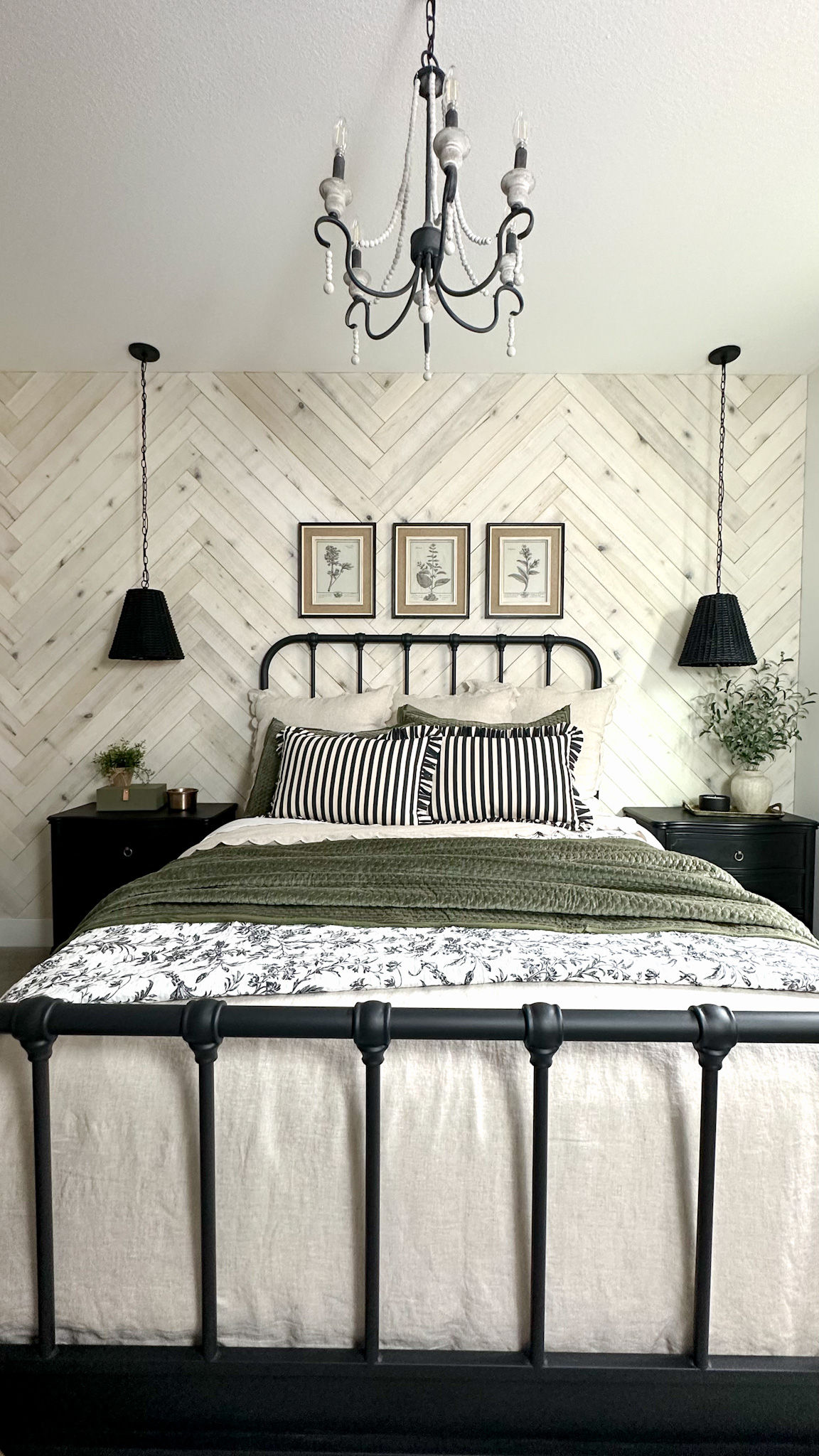

When we first moved into our home, this room was… well, let’s just say it had personality, but not the good kind. It was dark, boring, and completely uninspiring. I always knew I wanted to give it a fresh, modern accent wall, but life (and other projects) kept getting in the way. Finally—four years later—I carved out the time to make it happen. The result was absolutely worth the wait, and I’m sharing exactly how I did it so you can try it too.

Starting Your DIY Herringbone Accent Wall
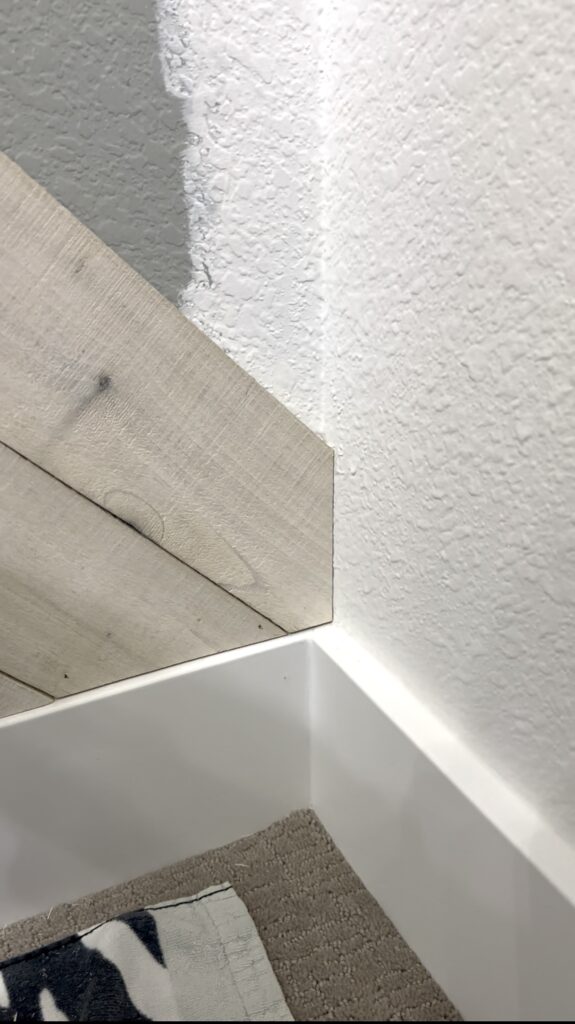
If your baseboards are deep enough, you can stack the wood directly on top of them. If not, you’ll need to remove them and reinstall them over the new wood. I’ve been upgrading my home’s baseboards as I go, replacing the undersized ones with 5 ½-inch baseboards. These were the perfect size for installing the accent wood right on top. Use a stud finder to locate the studs in your wall and mark them with a chalk line. Then, find and mark the center of the room—this will be your starting point. Align your center mark with the first two boards where they intersect (see example in this Instagram post).


Using a brad nailer, attach your boards directly into the studs. If you reach the end of a board and there’s no stud available, use construction adhesive to ensure a secure fit. When you encounter an outlet, mark its location on the board with a pencil. Cut out the shape using a jigsaw. To bridge the gap between the drywall and the new wood, use an outlet extender. You can see how I tackled this (and a section I totally messed up—oops!) in this Instagram post.


Fill all nail holes with spackling. I swear by Drydex—it goes on pink and dries white, making it easy to see when it’s ready to sand. Once dry, lightly sand the surface with 220-grit sandpaper to remove any excess. You can see the process in this Instagram clip. I skipped caulking because my cuts were snug against the walls, baseboards, and ceiling. But if you’d like, you can add crown molding at the top or quarter round along the edges for a more finished look. If you choose to caulk instead, be sure to tape off your boards first—too much caulk build-up can ruin the clean lines of your accent wall.
Look at That Glow-Up!
Now, my once-forgotten room has a focal point that feels fresh, warm, and intentional. It’s amazing what a weekend (and a little determination) can do for a space you’ve been avoiding for years.


Helpful Tips!
- Did you know that you should let your wood acclimate indoors for at least 3 days before installing? The reason is when you bring wood materials into a new space with different humidity levels, it can expand or shrink significantly, which can cause warping, cracking or gaps. Watch this for more!
- Always use the triangle square when installing each board to keep a 45 degree angle throughout.
- Some of the boards aren’t always going to perfectly align. You may need to try a few different ones to find the next piece that fits and aligns. These boards are more on the rustic side and aren’t all perfectly the same, which gives them so much character and adds texture to the space. I also found it best to lightly sand the surfaces prior to installation with 220 grit sandpaper, to avoid potential splinters and smooth out the texture slightly.
- Regularly step back to look at your project to make sure everything is going to plan. It’s easy to get off track with this pattern, which happened to me on the lower right side. Luckily, I caught my mistake before I was too far into the project and was able to easily fix it.

- When making the cuts along the edge of the wall I used foil to make a template of the cut that I transferred onto the wood for a perfect fit.


Tools and Materials You Will Need
- Sandpaper 220 Grit
- Construction Adhesive
- Caulking Gun
- Triangle Square
- Chalk Line Tool
- Stud Finder
- Outlet Extenders
- Spackling
- Wallboards
- Crown Moulding
- Quarter Round
- Baseboards
- Brad Nailer
- Miter Saw
- Jigsaw
Shop Furniture and Decor Here!
Leave a Reply


AeGefUfrFAjMsnZZdrJRLuc
https://shorturl.fm/cqD9P